
The Language of Spice
A Practical Guide to Flavor, Heat, and Aroma
In development and seeking representation
Overview
In development and seeking representation
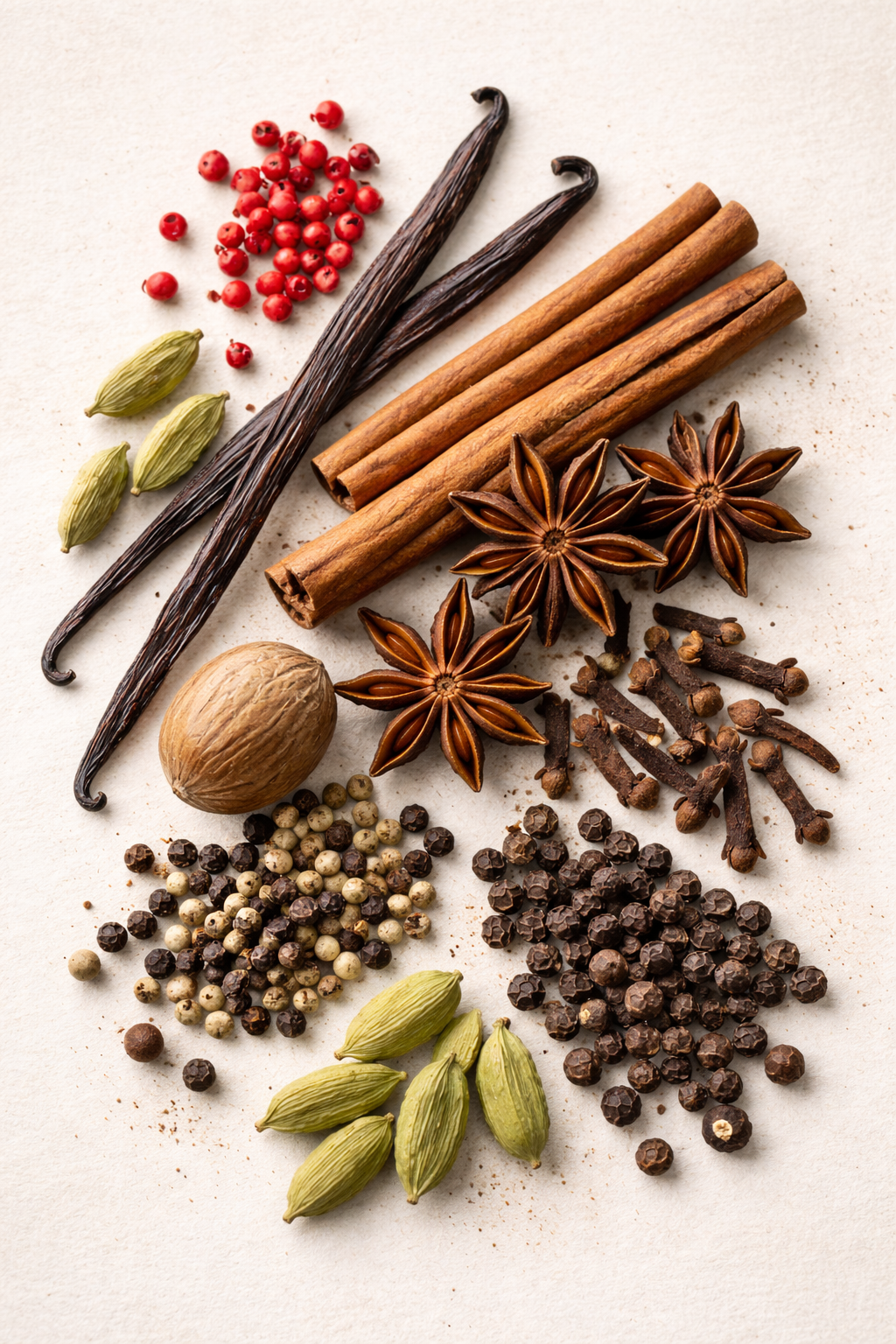
The Language of Spice is a systems-based culinary reference project designed to help cooks understand how spices function within real cooking environments. Rather than presenting spices as isolated flavor notes, the book explores how heat, aroma, structure, timing, and context shape the way spices register and interact in finished dishes.
The project is structured to build durable culinary understanding — enabling readers to diagnose problems, design better outcomes, and adapt across cuisines rather than relying on memorized pairings or rigid recipes.
What This Book Explores
The Language of Spice introduces a shared vocabulary for understanding spice behavior through interconnected systems, including:
• Functional spice families based on how flavors behave rather than where they originate
• Application anchors for heat, aroma, bitterness, and astringency
• Timing and technique frameworks that explain when and why spices are added
• Diagnostic models for identifying and correcting common flavor failures
• Real-world constraints such as storage, reheating, and home-kitchen limitations
The goal is not to replace intuition, but to give cooks a clearer mental model for how spice decisions affect outcomes.
-

Intended Audience
The Language of Spice is written for serious home cooks, culinary students, and learning chefs who want to move beyond surface-level flavor descriptions and develop a deeper, more transferable understanding of spice use.
While accessible to motivated home cooks, the book is designed to reward careful reading and application, making it particularly suited to readers who enjoy reference works, structured learning, and systems-oriented thinking.
-
Structure
The book is organized around foundational systems that govern how flavor registers in cooking, followed by detailed explorations of spice families and applied case studies. Each section is designed to stand on its own while contributing to a coherent whole.
Reference charts, comparative tables, and practical frameworks are integrated throughout to support real-world use in the kitchen.
-
Current Status
The Language of Spice is currently in development and seeking representation. Core systems and structural frameworks are complete, with manuscript development progressing alongside editorial refinement and visual planning.
Publication details, format, and distribution will be determined in partnership with an agent and publisher.
-
Future Companion Materials
Select companion materials may be developed in the future to support the book’s systems and applications. These may include reference charts, supplemental guides, mobile apps, or other educational materials designed to extend the book’s usefulness beyond the page.
Details regarding any companion content will be finalized after publication planning is complete.
Author
Robert Shankwitz III is a systems-oriented culinary writer and educator whose work focuses on how flavor, heat, and structure interact in real kitchens. His approach emphasizes clarity, diagnosis, and long-term learning over trend-driven instruction.
For representation, rights, or editorial inquiries related to this project, please use the contact information provided on this site.